intermezzo links
but is it "in-ter-METZ-o" or "in-ter-meh-zo"
Intermezzo week is going strong, baby! Here’s a syllabus of Sally links (+ an unrelated fun NY weekend thing to do below) for you…
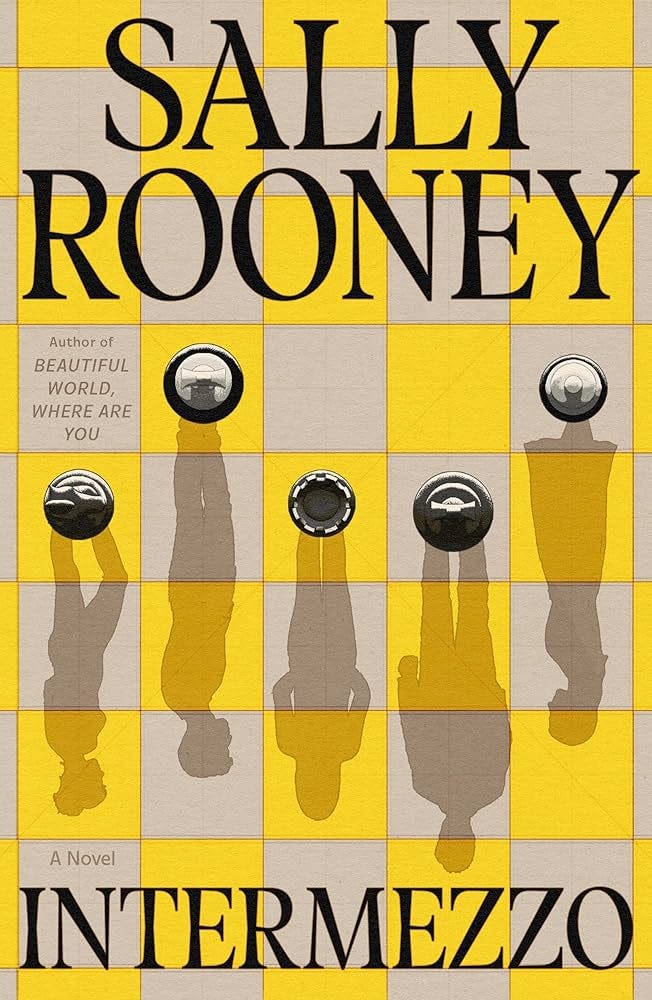
FYI: if you’ve yet to pick up a copy and feel major literary FOMO, you can apparently listen to Chapter 1 on the NYT app and then read the New Yorker excerpt from July, which is basically Chapter 2! (and lowkey the best one in my opinion)
Also ICYMI: Kyle Chayka and I spent an hour discussing our favorite lines and details from the novel for the Deez Links Book Club podcast, which you should listen to **immediately** and **only** when you’ve finished the book and are in that glorious post-novel fugue state of obsession. Come obsess with us.
The Interviews:
The NYT interview: In which David Marchese tries to broach the whole lit it girl persona discourse with Rooney, and she really puts up a fight! (This Q&A also confirms that something weird happened with that Guardian piece, because she’s obviously willing to give less bland answers!)
This part was kind of wild; I just can’t imagine being a serious writer and being incurious about your fave writers’ lives?
“I don’t tend to wonder about the relationship between the writer’s life and the writer’s work. Part of it might be that that’s an imposed relationship that comes from outside, and I want to resist engaging in that. But I think part of it is a genuine lack of interest. Before I ever became a published writer, I also didn’t read writers’ biographies or even really know anything about writers. I would know what period they lived in. That’s kind of it, and I’m still a little bit like that.”
This is the closest she comes to engaging with the public Sally persona stuff:
“I suppose that the role afforded to young women in the culture tends to be very image-focused and less intellectual. The young women who are given the most prominent roles in our mainstream culture tend to be not political figures and not public intellectuals and not critics or commentators. That’s maybe the space that I’m trying to work within, and maybe I’m not legible within that space. I sometimes feel people want to read me as something closer to a kind of celebrity figure, because that’s the way in which we’re used to reading the image of a young woman.”
In The Irish Times, Rooney gets more into the weeds about her influences + the writing process than I’ve seen before; plus gifts us one extremely fabulous earnest quote: “I am an extraordinarily privileged creature.” Incredible lol.
The below line also explains why, imo, the endings of most of her books (with the exception of Normal People, which I would argue has the best last line ever):
She writes on the level of the sentence and the scene: there is no big picture. Only at the end does she have to step back and think: what is this book about? To pronounce upon that feels a bit fraudulent, as it is not intentional. It also makes the resolution hard.
The Reviews
A funnily ecstatic one from NYT’s Dwight Garner: Sally Rooney, Heart on Her Sleeve, Writes a Weeper
Anthony Bourdain was always exhorting his audience to live, live! In one of his arias on this topic, he advised us to “Eat at a local restaurant tonight. Get the cream sauce.”
“Intermezzo” is Sally Rooney with a bit more butter and cream. Yes, please, waiter. Call me a fool for love, but this oft-jaundiced reader found this meal to be discerning, fattening, old-school and delicious.
+ My absolute fave Intermezzo link of all, from NY Mag’s Andrea Long Chu: A Lover’s Theory of Marxism, with lines like “The literary novel is, as it were, the missionary position of literature.” Just an absolutely perfect match of critic + author to deal with the commodification question:
So in this criticism — that Rooney writes about love because readers love that sort of thing — we find an important, if largely unconscious, observation about the intersection of literature and capitalism: that the novel form and the commodity form are dialectically entwined, to the point that a given novel’s literary qualities may be impossible to distinguish from its economic ones. The funny thing is that this is precisely what Rooney writes novels about.
Honestly, I would have thought ALC, as the premier roaster of any author/novel’s bourgeoise base instinct, would have something cutting to say—Rooney’s presentation of pretty limited (and always successful) romantic heteronormative love as our only attainable ideal seems absolutely ripe for dicing! Someone’s gotta get in there! But then you get to the kicker hehe, which either absolves or explains the rosiness. Congrats ALC! But also…seems like some place should make someone who’s actually heartbroken review Sally……..
The Discourse!!!! (what u actually care about right)
The Sally Rooney Effect (Airmail) <- read if you can’t find snark anywhere else and kind of want to, starring this zinger from Leah Abrams: “another Rooney book where quiet, nobly suffering women are cured by magical dick.”
Are You Cool Enough for the Latest Sally Rooney Novel? (Esquire): “What was unique about this rollout, though, was that each galley copy was named and numbered—becoming an instant “status symbol in the bookish community,” Bossard says. In total, 2,500 copies were sent to booksellers, journalists, book reviewers, influencers, and, yes, celebrities.”
^^2500! That seems high to me actually re: how many individuals on the planet there are who can sway the American literary tide… the real number is probably like, what, 5 celeb book clubs + 10 Booktookkers right now?
There Will Never Be Another Sally Rooney (TIME): “Authors like Hoover and Henry have solidified blocks of voracious readers with buying power in the romance space, Twilight sparked a wave of vampire novels, and The Fault in Our Stars launched “sick lit”—but Rooney’s sales haven’t translated to other contemporary literary books in any traceable way. Where did her audience look next? Literary agent Monika Woods says those readers are looking toward Jane Austen or other classic women writers. ‘They’re reaching backwards because Sally Rooney writes such instantly classic prose. She’s not straining for the contemporary.’”
Why Are All the Characters in Sally Rooney’s Novels So Thin? (Vogue) <- this one really got the people goin! Congrats Emma lol:
“Intermezzo’s 20-something student and occasional sex-worker character, Naomi—a hardier, somewhat less ethereal protagonist, whose boyfriend deems her “a carnivore”—tucks into a “family-size bag of Doritos.” But even while she’s eating, the “smooth obtrusion” of her prominent ankle bone is noted … Rooney’s slim characters are able to detach from their bodies in ways that it’s often assumed fat people cannot, by sheer virtue of the fact that our physical forms have always connoted a lack of discipline that thin people are spared.”The Thing About Intermezzo That Bugged Us the Most (The Cut) ← contains a bit of a spoiler of course, but yeah, what gives about Sylvia’s vague medical plotline? Is it because Rooney finds life without sex literally unimaginable??? lol
Finally, in non-Intermezzo but still “cultural flex material” news:
If you’re in NY this weekend, you can literally go have a Criterion Closet moment of your own: The Criterion Collection recreated their closet and put it in a little mobile truck, and it’s gonna be parked outside Alice Tully Hall at the Lincoln Center Oct 5-6, from 11am-9pm. You get three minutes inside and a IG-flex-worthy Polaroid…but just be ready to WAIT in line because the city cinephiles are out in droves for it…
I went up there last weekend with my boyfriend, mostly to see the crowd (people apparently started lining up at 7:45 am in the rain on Saturday???), but once we were inside the “closet,” the sensation of being totally surrounded by the walls of DVDs felt not unlike a state of pleasant dissociation I recall from like, a childhood afternoon spent at the library. It was sort of like an art exhibit? Very Infinity Mirrors, where you’re immersed not by reflections but these plastic boxed representations of whole entire cinematic worlds. I got kind of emotional? Many existential thoughts about how there’s too much art in the world to witness in one lifetime were had; I felt both inadequate (for recognizing too few titles) and blissfully grateful (for living in an era of actually limitless aesthetic experience).
It's cozy szn! Try bundling up with Hard Copy, the free comfort newsletter for slow weekends. Join the thousands of busy women who already subscribe to enjoy curated recommendations for what to watch, listen to, and read. Grab that second cup of coffee and let's unwind.


"I just can’t imagine being a serious writer and being incurious about your fave writers’ lives?" I don't think this indicates incuriosity per se! I don't enjoy reading about writers because I find most writer biographies bad in the way most movie biopics are bad -- formulaic, presumptuous, silly, overly censorious or hagiographic, etc etc etc. I don't think a human life can have a thesis imposed on it the in the way a great deal of biographers like do to, and ultimately they're more a distillation of whatever the author of the biography believes than true insight into "writers' lives."
such a great closet pick!
https://www.youtube.com/watch?v=iwEdvXKFRJQ
